Ontario law requires employers to accommodate employees’ disabilities unless it causes undue hardship. Beyond legal compliance, small businesses can improve retention and productivity by adopting ...

27kesä

In an era defined by digital connectivity, a paradoxical physical isolation has emerged. Many people are only beginning to recognise how much physical touch contributes to emotional wellbeing, and the absence of it can take a noticeable toll. Psychologists often refer to this phenomenon as ”skin hunger” or ”touch starvation.” It describes a profound, often unarticulated craving for physical contact that, when left unmet, may contribute to increased stress, loneliness, and difficulty fully relaxing.
Understanding skin hunger is the first step toward addressing it. By exploring the biology of touch and the intentional practice of massage, it becomes possible to transform a simple self-care routine into a supportive tool for emotional regulation and human connection.
Skin hunger is more than just a poetic concept; it is a widely discussed aspect of emotional and physical health. Human beings are biologically wired for touch. From the moment we are born, physical contact is a primary way we communicate safety, receive comfort, and bond with others.
When daily life consists largely of interacting with screens, keyboards, and steering wheels, the skin is deprived of the sensory input it evolved to expect. Without these physical cues, the body may struggle to fully relax, sometimes maintaining a subtle state of tension. Recognising skin hunger as a legitimate aspect of human wellbeing removes the stigma around craving touch and highlights the value of actively incorporating it into our wellness routines.
The impact of physical touch on the brain can be immediate and profound. When the skin experiences the slow, rhythmic pressure of a massage, it is thought to stimulate the vagus nerve. This crucial nerve, which runs from the brainstem down to the abdomen, is a key player in the parasympathetic nervous system—the body’s ”rest and digest” network.
Research suggests that mindful touch may help support a lower heart rate, encourage healthy blood pressure, and be associated with balanced cortisol levels. Simultaneously, positive physical contact has been linked to the release of oxytocin, the neurochemical associated with bonding, trust, and feelings of deep calm.
This biochemical shift is often the foundation of emotional regulation. When the nervous system is gently guided out of a fight-or-flight state and toward a parasympathetic state, the mind naturally follows. Anxiety may soften, racing thoughts can slow down, and the capacity to process emotions improves. Touch can help ground us, pulling our awareness out of anxious thoughts and back into the physical safety of the present moment.
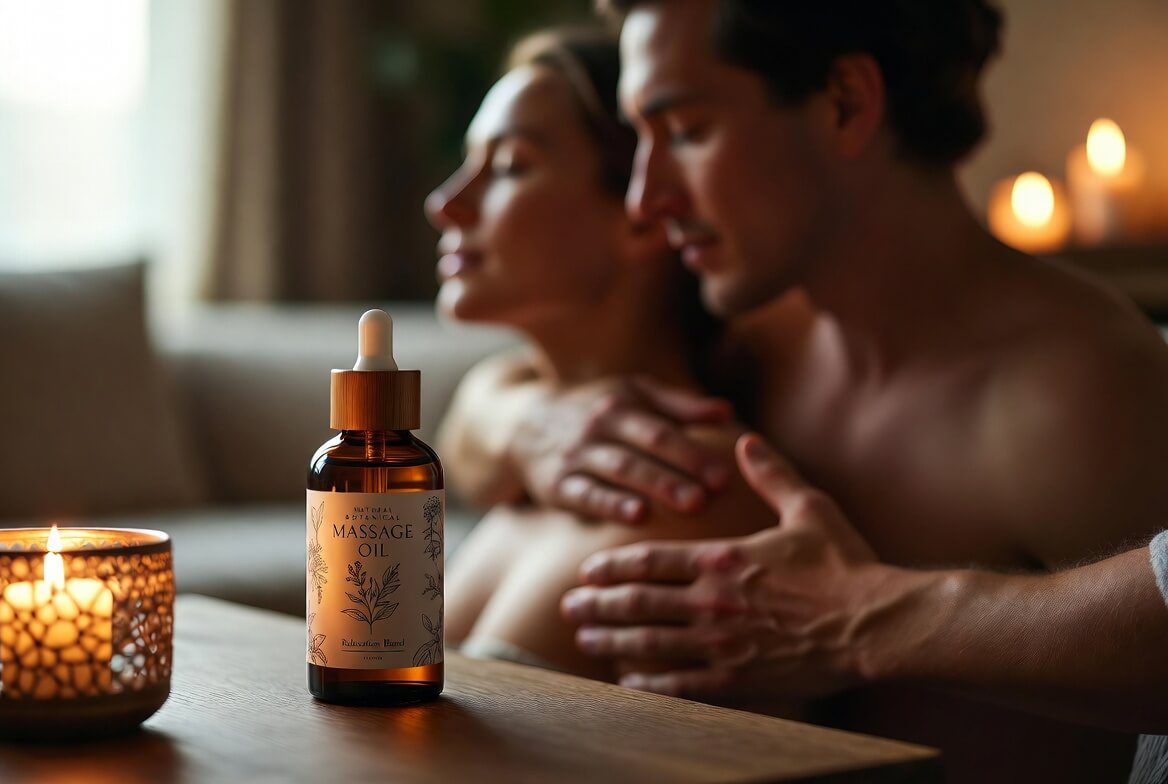
While self-massage offers significant benefits for individual stress relief, massage is equally valuable when shared. Massage is one simple way to bring safe, intentional touch back into daily life, serving as a bridge for non-verbal communication between partners, family members, or close friends.
In the context of a relationship, offering a massage requires presence. It encourages you to put away distractions, tune into another person’s physical cues, and dedicate your time to their comfort. This act of focused attention can communicate care, gratitude, and empathy in a way that words often cannot. It helps break down the emotional barriers that daily stressors and busy schedules naturally erect. By creating a dedicated space for this exchange, couples and families can nurture intimacy, foster a deeper sense of trust, and mutually support each other’s relaxation.
The efficacy of a massage is not determined by the hands alone; the medium used to facilitate the touch plays a critical role. Massage oil serves two primary purposes: it provides the necessary ”glide” to prevent friction and tugging on the skin, and it acts as a vehicle for aromatherapy and topical nourishment.
Because massage oils remain on the skin for an extended period, ingredient quality matters. A well-formulated botanical oil can support glide, skin softness, and a more natural sensory experience. Using high-quality ingredients ensures that the skin is treated to beneficial plant lipids, rather than heavier or less skin-friendly ingredients that may not suit every skin type, ensuring the practice remains as pure as the intention behind it.
Navigating the personal care market can be challenging, as many commercial products labelled as ”massage oils” are actually formulated with cheap mineral oils, synthetic fragrances, and chemical preservatives. To truly support your wellbeing, it is essential to look for cold-pressed, plant-based carrier oils.
Ideal carrier oils include sweet almond, jojoba, fractionated coconut, or apricot kernel oil. These botanical oils closely mimic the skin’s natural sebum, allowing them to absorb beautifully without leaving a greasy residue, while offering skin-friendly fatty acids and natural emollient benefits. Furthermore, these oils should be blended with pure essential oils or naturally derived aromatic ingredients to provide genuine aromatherapeutic benefits, such as the calming properties of lavender or the grounding nature of sandalwood.
For those seeking a more sensory, botanical approach, small-batch blends such as natural massage oils from Wildfire offer an alternative to generic, synthetic-feeling products. Prioritising plant-based ingredients ensures that the sensory experience—from the moment the cap is unscrewed to the final absorption—supports a deeply calming environment.
Integrating massage into your life does not require a professional studio or an hour of free time. It begins with setting a simple, intentional ritual at home.
Start by curating the environment. Dim the overhead lights, perhaps light a single candle, and eliminate digital distractions by leaving phones in another room. Warm a small pool of your chosen botanical oil between your palms. Before making contact, take three deep, slow breaths, inhaling the natural aroma of the oil to signal to your brain that it is time to transition out of the day’s stress.
Whether you are working out the tension in your own feet and hands, or offering a shoulder massage to a partner, move slowly. Focus entirely on the sensory feedback—the warmth of the oil, the texture of the skin, and the rhythm of your breathing. By treating massage not as a chore to be rushed, but as a mindful pause in the day, you can transform a simple physical act into a nourishing practice of comfort, connection, and calm.

If you are interested in Myyntikulma’s commercial collaboration services and want to take your business visibility to the next level, you can read more here:
https://myyntikulma.com/yhteistyokumppanit/
Thank you for reading!